Introduction to the Power of Positive Thinking
Positive thinking refers to a mental attitude that focuses on constructive thoughts, balanced optimism, and solution-oriented perspectives. It does not mean ignoring problems or denying challenges. Instead, it involves approaching situations with clarity, resilience, and realistic confidence.
The concept gained widespread attention in the 20th century, especially after the publication of The Power of Positive Thinking by Norman Vincent Peale. Over time, the topic evolved beyond motivational writing and entered the fields of psychology, neuroscience, and behavioral science.
Today, positive thinking is closely linked with cognitive behavioral therapy (CBT), emotional intelligence development, and resilience research. It is studied within the framework of positive psychology, a scientific discipline that examines well-being, optimism, and human strengths.
Why Positive Thinking Matters Today
Modern life involves constant exposure to stressors such as economic uncertainty, digital overload, academic pressure, and workplace competition. In this environment, stress management strategies and mental resilience have become essential life skills.
Research in positive psychology shows that constructive thought patterns can influence:
-
Stress response regulation
-
Emotional stability
-
Problem-solving ability
-
Decision-making quality
-
Interpersonal communication
Below is a simplified comparison of common thinking styles and their typical impact:
| Thinking Pattern | Focus Area | Likely Outcome |
|---|---|---|
| Catastrophic Thinking | Worst-case scenario | Anxiety, avoidance |
| Neutral Thinking | Facts without interpretation | Stable but limited motivation |
| Positive Thinking | Solutions and possibilities | Increased resilience and adaptability |
Positive thinking psychology is not about unrealistic optimism. Instead, it encourages:
-
Balanced risk assessment
-
Constructive self-talk
-
Emotional awareness
-
Long-term perspective
It benefits students, professionals, entrepreneurs, caregivers, and individuals managing mental health challenges. By strengthening growth mindset principles, individuals can respond more effectively to setbacks and uncertainty.
Recent Developments and Research Trends
In the past year, mental health awareness has continued to expand globally. In 2026, multiple academic institutions reported increased research funding for digital mental wellness tools and resilience-building interventions.
Key trends observed in 2026 include:
-
Greater integration of AI-powered mental health apps for mood tracking
-
Increased corporate adoption of workplace well-being programs
-
Expansion of online cognitive behavioral therapy platforms
-
Broader implementation of emotional intelligence training in schools
Research published in early 2026 in behavioral science journals highlighted that structured gratitude practices and mindfulness meditation benefits are associated with measurable reductions in perceived stress.
Another notable trend is the use of wearable technology to monitor physiological stress indicators such as heart rate variability (HRV). This data helps individuals understand how thought patterns affect physical responses.
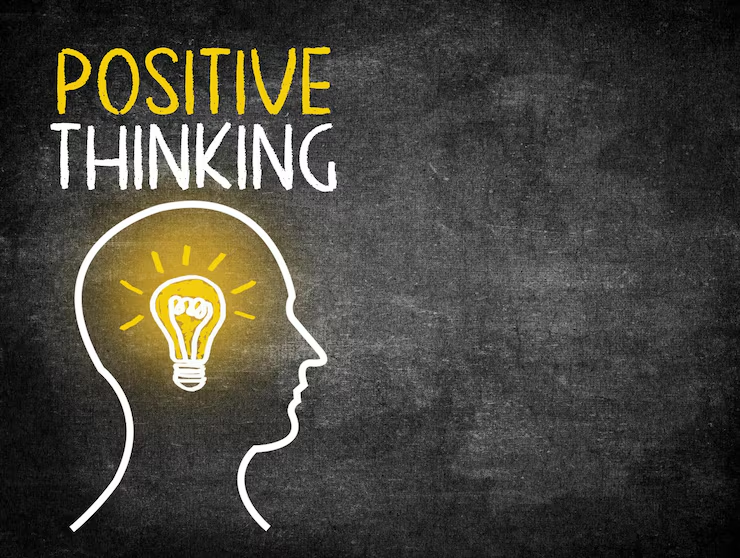
The graph below illustrates a simplified relationship between positive thinking practices and stress reduction over time: Like us:-Successful People Morning Routine Guide: Habits, Productivity, and Daily Success Strategies
Stress Level
High | ██████████
Medium | ███████
Low | ███
Weeks of Consistent Practice →
While simplified, this representation reflects research findings showing gradual improvement rather than instant transformation.
Legal and Policy Frameworks Influencing Mental Well-Being
Positive thinking as a concept is not regulated by law. However, mental health programs, psychological services, and digital wellness platforms operate within national legal frameworks.
In India, the Mental Healthcare Act, 2017 ensures the right to mental healthcare services and protects individuals from discrimination. This legislation promotes awareness, accessibility, and dignity in mental health treatment.
Globally, organizations such as the World Health Organization emphasize mental well-being as part of sustainable development goals. National education policies in several countries now incorporate emotional well-being modules in school curricula.
Workplace mental health guidelines are also expanding. Many corporate compliance frameworks require employers to address psychological safety and stress management.
Digital mental health apps must follow:
-
Data protection regulations
-
Privacy and confidentiality standards
-
Informed consent requirements
-
Ethical clinical practice guidelines
These policies ensure that mental wellness tools are evidence-based and protect user rights.
Practical Tools and Resources for Developing Positive Thinking
Developing a constructive mindset requires consistent practice. The following tools and structured techniques support measurable improvement.
Positive Psychology Literature
-
Learned Optimism by Martin Seligman
-
Research publications on resilience and cognitive restructuring
Mental Wellness Apps
-
Headspace
-
Calm
-
Moodfit
Structured Techniques
-
Cognitive reframing worksheets
-
Gratitude journaling templates
-
Self-reflection assessment forms
-
Stress response tracking logs
Daily Personal Development Strategies
-
Morning intention setting
-
Thought record exercises
-
Solution-focused questioning
-
Mindfulness breathing sessions
Below is a sample daily practice structure:
| Time of Day | Practice Type | Duration |
|---|---|---|
| Morning | Affirmation and goal clarity | 5 min |
| Afternoon | Cognitive reframing exercise | 10 min |
| Evening | Gratitude reflection | 5 min |
Consistency is more important than intensity. Small, structured actions support long-term mental resilience.
Frequently Asked Questions
What is the difference between positive thinking and toxic positivity?
Positive thinking acknowledges challenges while focusing on constructive responses. Toxic positivity dismisses negative emotions and discourages realistic discussion. Healthy optimism includes emotional awareness and problem-solving.
Can positive thinking improve mental health conditions?
Positive thinking can support overall mental health improvement, particularly in reducing stress and improving coping skills. However, it does not replace professional psychological treatment when needed.
Is positive thinking scientifically proven?
Research in cognitive behavioral therapy and positive psychology supports the link between thought patterns and emotional regulation. Studies indicate that reframing negative beliefs can reduce anxiety and improve resilience.
How long does it take to see results?
Changes vary by individual. Many studies suggest noticeable improvements in stress management and mood after 4–8 weeks of consistent practice.
Can positive thinking improve physical health?
Constructive thought patterns can influence stress hormones and immune response. While not a substitute for medical care, improved emotional regulation may contribute to overall wellness.
Conclusion
The power of positive thinking is grounded in psychology, neuroscience, and behavioral science. It emphasizes realistic optimism, structured cognitive reframing, and emotional intelligence development.
In today’s high-pressure environment, resilience building techniques and stress management strategies are essential life competencies. Positive thinking does not eliminate obstacles, but it improves the quality of response to them.
By applying growth mindset principles, using evidence-based tools, and practicing daily reflection, individuals can strengthen mental clarity and adaptability. Supported by research, guided by ethical frameworks, and enhanced through digital resources, positive thinking remains a practical and measurable approach to personal growth.
The most effective approach is systematic: small daily actions, consistent awareness, and a balanced perspective grounded in evidence rather than exaggeration.
Follow us:-https://hosturl.info/vv6dw0


3 thoughts on “The Power of Positive Thinking Explained: Benefits, Psychology, and Practical Strategies”
Comments are closed.